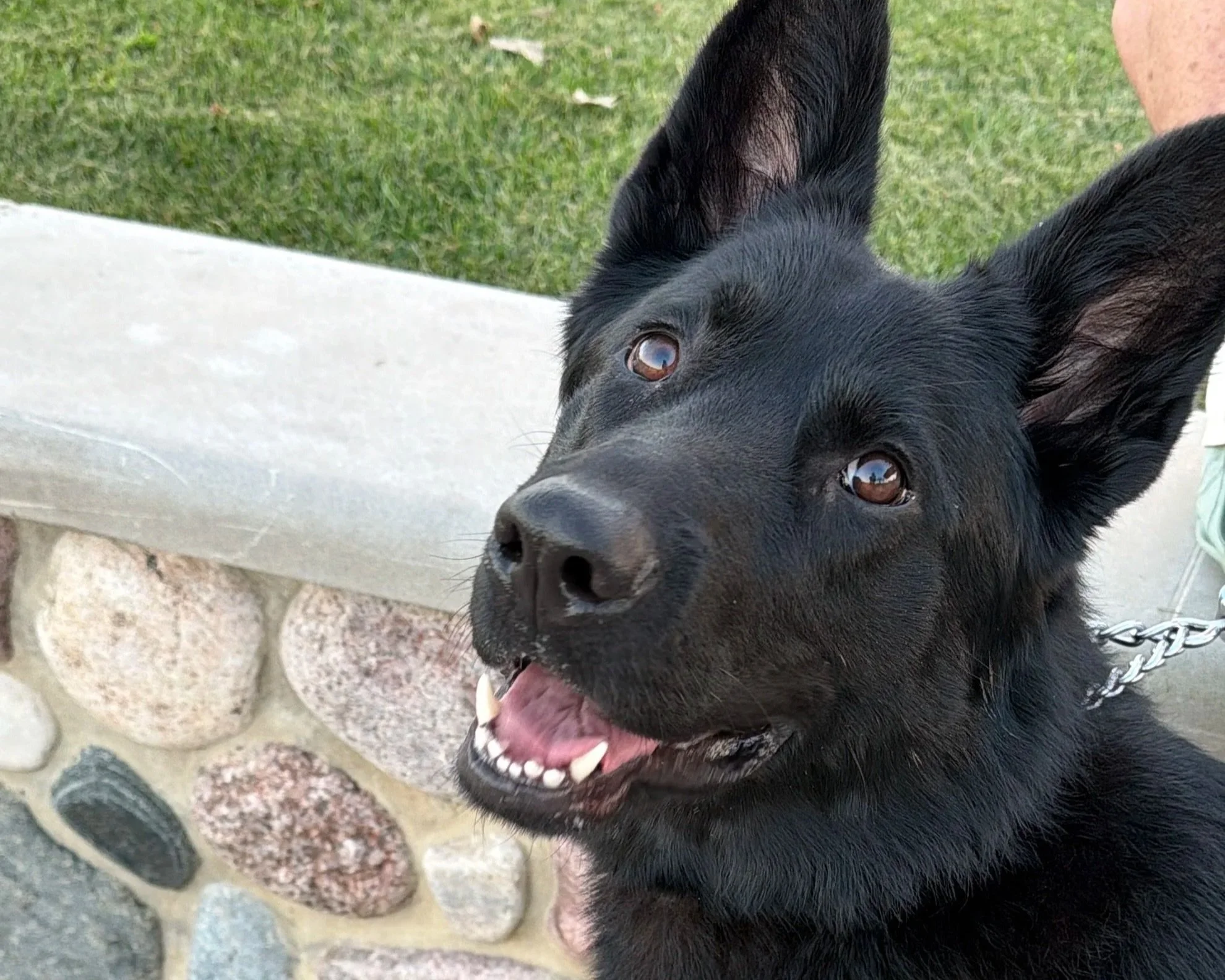
When I started breeding German Shepherds nearly 20 years ago, I loved my dogs, had the best intentions, and wanted to do everything right.
But I didn't know everything I needed to know. And looking back, there are things I would have done differently.
I made mistakes. Not because I didn't care about my dogs, but because I didn't know what I didn't know.
When I went looking for answers, I quickly discovered how difficult it could be to find reliable information about breeding. There were conflicting opinions, different recommendations, and very little agreement about what constituted good breeding practices.
And if you dared to ask a question online, you sometimes received more criticism than actual help.
Instead of education, there was judgment. Instead of constructive guidance, there were people eager to tell you everything you were doing wrong.
I found that incredibly frustrating.
I wanted to learn. I wanted to improve. I wanted to be a better breeder. But I also needed access to information and people who could help me get there.
Over time, as I gained experience and learned from my own successes and mistakes, I began thinking about how many other breeders were probably experiencing the same thing.
How many people started breeding because they genuinely loved their dogs, only to discover that good intentions weren't enough?
And how many of those breeders might have made better decisions if they'd had access to clear information, meaningful education, and practical guidance rather than criticism?
Those questions eventually led me to establish Herzog's Heroes.
And they became the foundation of something I believe has the potential to change dog breeding for the better: conscientious breeding.
Why Herzog's Heroes Started
Herzog's Heroes grew directly out of my experiences with Herzog German Shepherds.
As I became more involved in understanding the larger issues surrounding dog breeding, I began looking beyond my own program.
I saw an enormous divide between the breeding community and the animal rescue community.
On one side were breeders who often felt attacked, misunderstood, and unfairly blamed for the problems facing shelters.
On the other were rescuers and animal welfare advocates dealing with the heartbreaking consequences of dogs being abandoned, relinquished, or left without adequate care.
I could understand the frustration on both sides.
But I also began to realize that blaming breeders wasn't going to solve the problem.
And neither was expecting rescue organizations to continue managing the consequences without addressing what might have prevented some of those dogs from entering shelters in the first place.
I wanted to focus on prevention.
What if we could help breeders make better decisions before puppies were even born?
What if we could improve how puppies were raised, how families were screened, how puppies were matched with their owners, and how those owners were prepared for the responsibilities ahead?
What if every breeder had a realistic plan for helping a dog they produced if its owner could no longer keep it?
And what if those responsibilities didn't end when a breeder retired, became ill, or passed away?
I began to see that conscientious breeding could address many of these questions by helping breeders build stronger, more accountable programs.
Herzog's Heroes wasn't founded because I believed every breeder was doing something wrong.
It was founded because I believed we could help breeders do better—and that better breeding could help prevent dogs from entering shelters.
Why We're Moving Away From the Term "Ethical Breeding"
For years, people have used terms like ethical breeder, responsible breeder, and reputable breeder to distinguish breeders they believe are doing things correctly.
The problem is that these terms don't have one universally understood meaning.
Ask ten people what makes an ethical breeder, and you may receive ten different answers.
For some, it's health testing and registration. For others, it's showing or titling breeding dogs. Some place tremendous emphasis on pedigrees, while others focus on how puppies are raised or whether the breeder will accept a dog back.
These can all be relevant considerations, but none tells us everything about how a breeding program operates.
And the word ethical has become particularly problematic.
It often turns conversations about breeding into a debate over whether someone is a good person or a bad person.
Once a breeder has been labeled unethical, meaningful discussion often stops.
Rather than identifying specific problems and helping breeders address them, the conversation becomes about defending or attacking the breeder.
I don't believe that's a productive way to improve breeding practices.
That's not to say ethics don't matter. They absolutely do.
But calling yourself an ethical breeder doesn't establish that your breeding practices are effective, responsible, or sustainable.
And being a caring, well-intentioned person doesn't automatically mean you're operating a conscientious breeding program.
I know that firsthand.
That's why I began using the term conscientious breeding.
I wanted language that shifted the focus away from labels and toward actions, responsibilities, and outcomes.
So, What Is Conscientious Breeding?
Conscientious breeding is an approach to dog breeding that emphasizes informed decision-making, animal welfare, transparency, accountability, and lifelong responsibility for the dogs a breeder produces.
It's about looking at the entire breeding program rather than evaluating a breeder based on a handful of individual practices.
A conscientious breeder considers not only the health, genetics, and temperament of the parent dogs, but also what happens before, during, and long after a litter is born.
That includes:
Thoughtful breeding decisions: Selecting breeding dogs and pairings with clear goals and appropriate consideration of health, temperament, genetics, and welfare.
Responsible puppy development: Providing age-appropriate care, enrichment, handling, and socialization that support puppies' physical and behavioral development.
Meaningful buyer screening and puppy matching: Understanding prospective owners' lifestyles, expectations, and capabilities, and considering each puppy's individual characteristics when making placement decisions.
Owner preparation: Helping families understand what to expect from puppyhood through adolescence and adulthood, including the challenges that may arise.
Continued support: Ensuring owners know how to contact their breeder when they need guidance or assistance, without creating unrealistic expectations for constant communication or follow-up.
Lifelong responsibility: Maintaining a practical plan to assist when an owner can no longer keep a dog the breeder produced, including safe return or rehoming arrangements.
Long-term planning: Establishing arrangements for the dogs and obligations of the breeding program if the breeder retires, becomes incapacitated, or passes away.
Accountability and improvement: Learning from outcomes, acknowledging limitations, and making meaningful improvements as new information becomes available.
These practices work together.
For example, a breeder might do an excellent job selecting healthy breeding dogs but put little thought into whether their puppies are being placed in appropriate homes.
Another breeder might provide exceptional early socialization but have no plan for what happens if an owner needs to relinquish a dog several years later.
A third might promise lifetime support but have no arrangements for fulfilling that commitment if something happens to them.
Conscientious breeding asks us to consider all of these responsibilities as parts of one interconnected system.
It's not just about producing a well-bred puppy. It's about building a breeding program that supports that dog's well-being throughout its life.
Good Intentions Are Important, but They Aren't Enough
I think this may be one of the most important lessons I've learned as a breeder.
I started with good intentions. I cared deeply about my dogs. But that didn't prevent me from making mistakes.
And I know I'm not alone.
Many breeders begin with a genuine love for their breed. They want to raise beautiful, healthy puppies and find wonderful families for them.
That's a great place to start.
But love alone doesn't teach someone about genetics, puppy development, reproductive management, buyer screening, contracts, behavioral challenges, or how to prepare for the unexpected.
Those things have to be learned.
And as breeders gain experience, they often discover areas where their practices need to improve.
I don't believe we should automatically dismiss someone because they're still learning.
But I also don't believe good intentions excuse practices that put dogs at unnecessary risk.
Conscientious breeding means accepting the responsibility to learn, to recognize where improvement is needed, and to take meaningful action.
Not every breeder will have the same facilities, resources, or procedures. Nor should they be expected to operate identical programs.
What matters is that their practices serve the needs of the dogs they produce and that they can demonstrate how they're fulfilling their responsibilities.
Some standards are fundamental. Other practices may be adapted to the size, structure, and goals of the breeding program.
The objective is not to create unnecessary paperwork or make breeding so complicated that conscientious people cannot participate.
It's to establish practical systems that help breeders make informed decisions, prevent avoidable problems, and respond responsibly when challenges arise.
What Does Conscientious Breeding Have to Do With Animal Shelters?
Quite a lot, actually.
When people think about reducing the number of dogs entering shelters, they generally think about adoption, rescue, spaying and neutering, or restricting breeding.
Those efforts are part of the larger animal welfare conversation.
But I believe we've overlooked an important opportunity: improving the systems behind how dogs are bred, placed, and supported throughout their lives.
Consider some of the reasons owners relinquish dogs.
Sometimes it's because the dog's temperament or activity level isn't compatible with the household.
Sometimes the owner wasn't prepared for the demands of raising a puppy or managing a challenging adolescent dog.
Other times, unexpected medical expenses, behavioral concerns, financial hardship, housing changes, or family circumstances make continued ownership difficult.
Not every relinquishment can be prevented.
But some of these situations can be addressed through better preparation, thoughtful matching, earlier support, and realistic contingency planning.
And when relinquishment cannot be prevented, a breeder who remains accountable can help ensure the dog has a safe path forward.
This is why I believe lifelong responsibility should be a defining expectation of conscientious breeding.
If breeders are going to bring dogs into the world, they should also accept a meaningful role in what happens to those dogs when things don't go according to plan.
That doesn't mean a breeder must personally house every returned dog or be available to every owner around the clock.
It means having realistic arrangements in place so that a dog doesn't become someone else's problem simply because its original home didn't work out.
The more breeders who adopt these practices, the greater the opportunity to prevent avoidable shelter admissions.
And that's where the philosophy behind Herzog's Heroes comes from:
Breed Better, Shelter Less.
I Believe Dog Breeding Can Become an Honorable Profession
This is something I feel strongly about.
Dog breeding has become a deeply divisive subject.
For many people, the term dog breeder immediately brings negative associations. Others see breeding as a valuable way to preserve breeds, produce dogs for specific purposes, and help families find companions suited to their lives.
I believe dog breeding can be an honorable profession.
But I also believe that honor comes with responsibility.
Breeders have an enormous influence over the lives of the dogs they produce.
We make decisions about which dogs reproduce. We influence puppies' earliest experiences. We help decide where those puppies will spend their lives. And we have opportunities to help when those placements encounter difficulties.
That's a tremendous responsibility.
It deserves thoughtful education, meaningful standards, accountability, and public trust.
I don't believe the answer is to divide breeders into good and bad categories and assume the problem is solved.
I believe the answer is to make conscientious breeding the expectation rather than the exception.
That means creating a culture where breeders are encouraged to learn, supported in improving their practices, expected to be transparent, and held accountable for meaningful responsibilities.
It also means helping prospective puppy buyers recognize conscientious practices so they can make informed decisions about where they purchase their dogs.
And it means recognizing that breeders, rescues, veterinarians, trainers, animal welfare organizations, and communities don't have to work against one another.
We can work toward the same goal: better lives for dogs.
Putting Conscientious Breeding Into Practice
Through Herzog's Heroes, we're working to turn conscientious breeding from a philosophy into something practical.
That includes developing breeder education, useful policies and procedures, standards for breeding programs, and resources that help breeders put those principles into action.
Our goal isn't to tell every breeder they must operate exactly the same way.
It's to identify the responsibilities that matter, help breeders understand them, and provide practical ways to fulfill them.
We also want to make it easier for puppy buyers to understand what conscientious breeding looks like, ask meaningful questions, and recognize breeders who are taking their responsibilities seriously.
You don't need to belong to an organization or hold a particular certification to begin practicing conscientious breeding.
But the principles should be more than a label someone gives themselves.
They should be reflected in the actual decisions, practices, and commitments of the breeding program.
And those practices should be open to evaluation and improvement.
The Future we Hope to Help Create
When I look back at the beginning of my own breeding journey, I think about how much I didn't know.
I also think about how different that experience might have been if reliable education, practical guidance, and a supportive community had been easier to find.
I can't go back and change the mistakes I made.
But I can use what I've learned to help other breeders avoid making some of those same mistakes.
That's what Herzog's Heroes means to me.
It's an opportunity to take nearly two decades of experience, including the difficult lessons, and use it to help create something better. But it’s no longer just me. A coalition has developed of people and organizations that support this cause. And to me, that’s the most important part.
We want breeders to feel proud of the work they do, and have meaningful practices and accountability.
We want puppy buyers to be able to recognize conscientious breeding without having to become experts themselves.
We want rescue organizations to see breeders as potential partners in preventing relinquishment, rather than viewing every breeder as part of the problem.
And we want dogs to benefit from decisions made with their entire lives in mind.
Conscientious breeding isn't about claiming to be perfect. It's about recognizing the responsibility that comes with bringing dogs into the world and making a genuine, ongoing commitment to do better.
That's the standard we’re working toward, both through Herzog German Shepherds and Herzog's Heroes.
And I believe it's a standard that can help change how we think about dog breeding.
Because better breeding isn't just about better puppies.
It's about better outcomes for dogs throughout their lives.
Breed Better, Shelter Less.